Are Tokay Geckos Actually Dangerous? The Truth About Thailand's Loudest House Guest
The 3am bark that terrifies every newcomer comes from a palm-sized lizard that is quietly eating your cockroaches. Meet the tukkae, and why your home is better off with one on the wall.
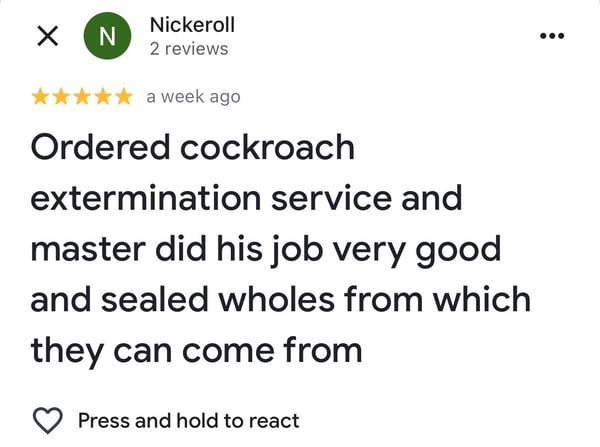
What Our Customers Say






There is a specific moment, usually somewhere around three in the morning, when a newcomer to Thailand hears a tokay gecko for the first time and becomes briefly and completely certain that an animal the size of a labrador has got into the bedroom. The sound arrives with no warning at all. First comes a kind of mechanical throat-clearing, a rattling wind-up like a small motorcycle deciding whether to start, and then the call itself, loud and deliberate and unnervingly close to speech: TOH-kay. TOH-kay. TOH-kay. It is the noise that gives the animal its name, in Thai and in English alike, and generations of bleary newcomers have sworn it is actually saying something a good deal ruder, which is a thing you believe absolutely at three in the morning and find funny only by breakfast.
You were not imagining the menace. You were simply wrong about the size.
Meet the tukkae
The tokay, tukkae to most people here, is the flashy giant of the household-lizard world, the second largest gecko on earth and by a comfortable margin the loudest. A big one reaches about thirty centimetres, most of which is confidence. It arrives dressed for a festival, powder-blue skin scattered with orange and red spots, huge lidless eyes it wipes clean with its own tongue, and a decidedly bite-first attitude toward anything foolish enough to corner it. It works nights. While you sleep, it patrols the walls and ceilings of your home on a slow, deliberate hunt, and it is remarkably good at the job.
Which brings us to the thing nobody mentions to the terrified newcomer. That hunt is doing you an enormous favour.
What it actually does all night
Spend a moment on the menu, because it is the entire point. A tokay's diet is more or less a list of everything you least want sharing your kitchen: cockroaches first and foremost, then moths, crickets, grasshoppers, spiders, and the occasional scorpion that wandered in during the rains. A large, well-fed adult will even take a small mouse or a young snake. In a Bangkok apartment, where the American cockroach treats the drains as a private motorway, a resident tokay is the nearest thing you have to a night watchman, and it charges nothing, keeps no hours, and never files a complaint.
Then there are the feet, which have earned a paragraph of their own, because they are one of the quiet marvels of the animal world. A tokay can hang from a sheet of glass by a single toe, and it does this with no glue, no suction, and none of the other things you would reasonably assume. Each toe is lined with millions of microscopic hairs, and each hair splits again into hundreds of finer tips, so the foot touches a surface across a number of points too large to picture. The upshot is van der Waals force, the faint molecular attraction between surfaces held very close together, multiplied until it will hold the whole animal upside down without effort. Laboratories have spent years trying to copy the trick, and the reason certain high-tech adhesives grip the way they do is, in a roundabout way, the creature currently bellowing at you from the curtain rail.
The bark, the count, and the maths
Now for the folklore, which is where the tukkae earns its odd status as an animal people are pleased to keep around. An old and widely held belief treats the gecko's call as a small household oracle. You count the barks. If the run ends on an even number, the omen is good and you may go about your day; if it ends on an odd number, the wiser move is to stay put. A companion version deals in direction: a tokay that calls out ahead of you as you step toward the door is giving the all-clear, while one that barks from behind you is a warning worth taking. Sitting somewhere in the middle is the cheerful idea that seven calls in a row means good news is on its way, or at the very least a guest, which is a lovely thing to believe at the precise moment a guest would be least welcome.
People take this more seriously than you might expect, and at least one person took it seriously enough to do arithmetic about it. There is a small and gloriously nerdy project drifting around the internet in which someone set out to test, with genuine statistics, whether a seven-bark warning could survive scrutiny. A spreadsheet analysis of a lizard superstition is about the most twenty-first-century object imaginable, and the fact that it exists at all tells you how deeply the tukkae has burrowed into ordinary life here.
Worth its weight, and working for free
The regard runs deeper than luck. Across the region the tokay has long been treated as a walking pharmacy, dried and powdered and steeped in rice whiskey to make a tonic sold for coughs, asthma, weak stamina, and a long parade of other complaints that no laboratory has ever shown it can touch. The trade is vast and not remotely kind to the animal. Each hot season, roughly March to July, geckos are caught by the tens of thousands and shipped north, which is a bleak sort of tribute to how prized they are. It is worth keeping that figure in mind the next time you reach for a broom. Somewhere out there, someone would gladly pay for the very gecko you were about to evict, and yours is doing the same work for nothing.
The one thing to remember
None of this is a case for befriending the animal. Like every reptile, a tokay can carry salmonella in its droppings, so the sensible rules are the dull, familiar ones. Do not handle it, keep it well clear of where you prepare food, and wash your hands if you have been near where it roosts. Treat the tukkae as a respected colleague on the night shift rather than a pet, and the arrangement suits everyone involved.
You do not have to choose
Here is the thought to carry into the next three-in-the-morning serenade. The gecko is not your pest problem. It is a symptom of your pest problem, which is a gentle way of saying it is upstairs because dinner is downstairs. Deal with the cockroaches and the ants at the source and the geckos drift away on their own, having run clean out of reasons to call.
That last part is what we do. Our natural, food-grade diatomaceous earth treatment goes after the roaches, ants, and other insects where they actually live, with no toxic sprays hanging in the air of a home you share with the wildlife and the family alike. The pests leave. The tukkae, should it fancy the peace and quiet, is welcome to stay, seven barks and all.
Curious which other household creatures are quietly on your side? Here is our full guide to the pests we don't treat, and why.
You Might Also Like
Jing Jok on the Wall: The Thai Superstitions Behind Your House Gecko
A chirp as you reach the door, a call from an empty room, a rare two-tailed gecko. The little house lizard carries more folklore than any other creature on your wall.
Why Are Centipedes So Feared in Thailand? And When You Should Actually Worry
Few creatures in Thailand can clear a room like the giant centipede. Some of that dread is earned, and a surprising amount of it is not. Here is where the line sits.
The Small Geckos in Your Condo Are a Blessing, Not a Pest
The little pale lizard darting behind the picture frame is not an infestation. It is a tireless mosquito hunter, and the old Bangkok habit of welcoming it was quietly wise.
Ready to Live Pest-Free?
Book your treatment today. Safe, effective, and guaranteed results.